
Creating value for the customer. But what kind of value?
Why a personal life mission, a company’s mission and the creation of value for customers should rest on authentic values, and not just on maximising the return on capital.
In the business world it is hard to find a more popular slogan than “creating value for the customer”. It appears in strategies, board presentations, annual reports and on company websites. Every organisation declares that this is exactly what it does.
Yet after more than thirty years in management, running large organisations and advising entrepreneurs, I can see that the very concept of value calls for deeper reflection.
For not all value is real value. Not all value improves the quality of people’s lives and builds a better world. And, above all, not all value is consistent with the leader’s personal life mission and the declared mission of the business.
Real value and illusory value
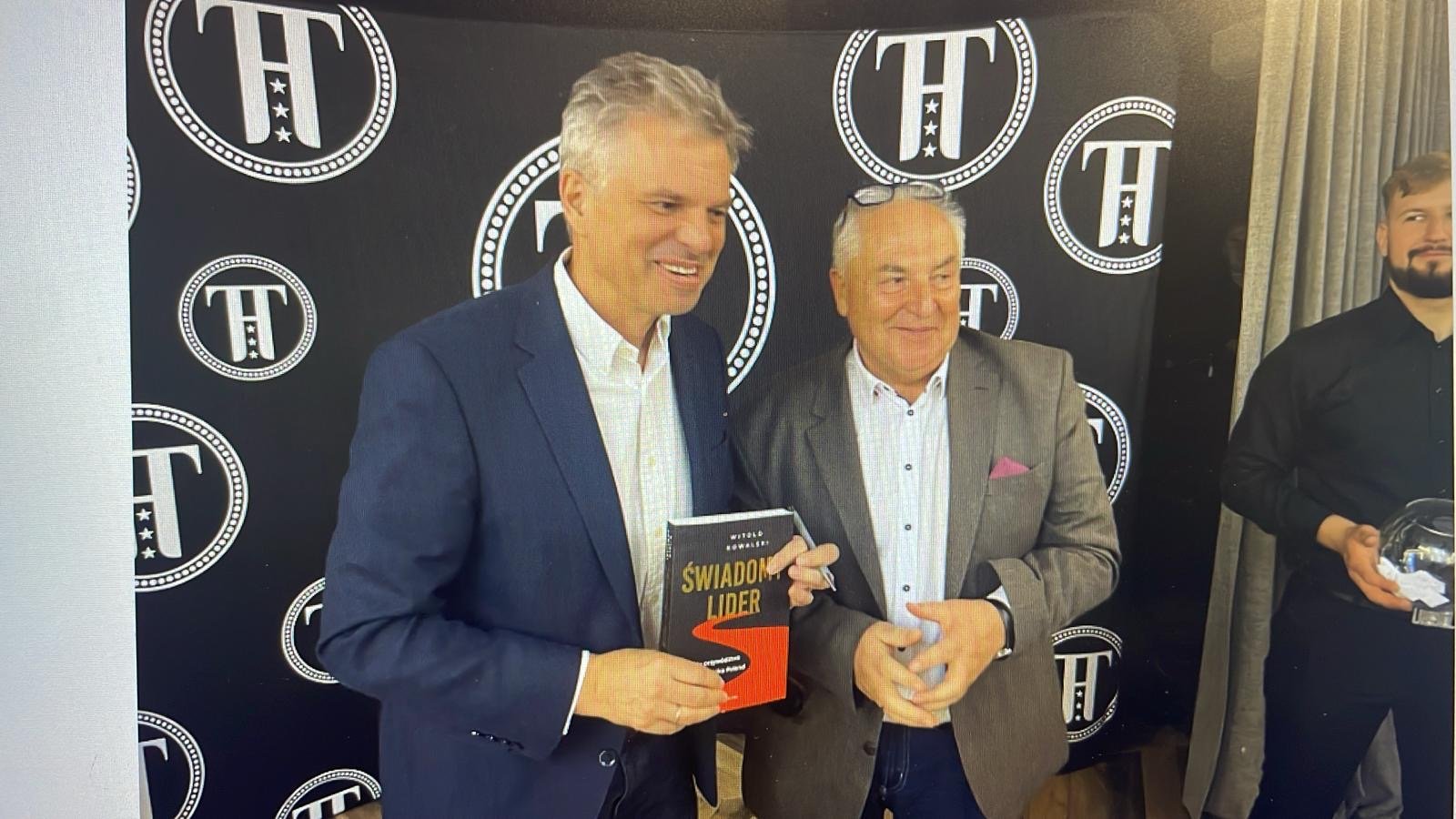
In my book Świadomy Lider (The Conscious Leader) I write about the importance of awareness in decision-making. A conscious leader, who is often seen as a bit of a crank, does not ask only:
“Will this increase sales, margin and profit?”
They also ask:
“Does this really serve people?”
The modern economy very often confuses economic value with social value.
If a customer buys a product, the company makes money and the statistics show growing revenue, we assume that value has been created.
But has it really?
The spirits industry produces millions of small bottles of alcohol. Customers buy them every day. Jobs are created, revenue grows, GDP grows and so do excise receipts. Later, however, come the health, social and family costs. Hospitals, clinics and therapy centres also “create value” by helping to solve problems that could have been avoided.
From an economic point of view, everything works. From the perspective of human wellbeing, not necessarily. There are more examples like this.
We make ever faster cars, and then create systems of speed limits and traffic control to reduce the consequences of excessive speed.
We make weapons, which increases GDP. Then we invest huge sums in protection against the consequences of conflict, at the expense of spending on education, health care, infrastructure or research and development.
We create a culture of constant haste and then develop a market for services that help people cope with stress. This is not a criticism of business. It is an invitation to ask ourselves an important question:
Are we solving real problems, or creating new ones?
What GDP does not measure
For decades economists have used GDP as the indicator of economic development.
The problem is that GDP measures economic activity, not quality of life.
It does not show:
the level of social trust,
the quality of family relationships,
mental wellbeing,
job satisfaction,
a sense of meaning in life,
the quality of leadership,
corporate responsibility.
If two people spend an evening talking and building a relationship, GDP does not grow.
If, on the other hand, one of them has an accident, spending on medical treatment, vehicle repairs and claims handling goes up. GDP grows.
This shows the limitations of the indicators on which we base our decisions.
Personal mission as a filter for decisions
In my work as a mentor I often meet entrepreneurs who have achieved financial success but lost their sense of meaning. They built a company. They did not build a life – or they ruined it. That is why I believe every leader should define their personal mission.
It is not about fashionable slogans written in a notebook.
It is about answering these questions:
What am I living for?
How do I want to influence other people?
What will remain of my work?
Which values am I not prepared to sacrifice, even for a bigger profit?
A life mission then becomes a compass. It makes it possible to tell opportunities from temptations. It helps you make decisions in line with your own conscience. Thanks to it, a leader does not get lost in a world full of indicators, rankings and short-term goals.
A company’s mission cannot be just a slogan
The same is true of an organisation. Most companies have fine-sounding mission statements. Few of them make decisions that are consistent with the values they have written down.
A company’s true mission answers the question:
“What benefit for the world – not necessarily only for shareholders – do we create through what we do?”
Only then should the second question follow, or perhaps in parallel after all:
“How will we make money from delivering that benefit?”
An authentic organisation does not choose between value for the customer and profit. It understands that lasting profit is the result of creating real value. For now, this proposition is a good script for a science-fiction film.
If, thanks to the product, the customer:
saves time,
improves their health,
develops their skills,
is safer,
builds better relationships,
leads a more satisfying life,
then we can speak of real value.
This paragraph is unrealistic under capitalism, which is, after all, based on the return on capital.
Finance as a result, not the only goal
When writing the book Finanse dla niefinansistów w praktyce (Finance for Non-Financial Managers in Practice), I stressed many times that money is extremely important. A company without profit and liquidity will not survive. A company without profitability will not develop.
Profit, however, is the result of a job well done; it should not be the sole reason for a business to exist.
If the goal is solely to maximise the financial result – which is most often the case – it is easy to cross the line between creating value and exploiting customers or satisfying their illusory needs, and to overwork employees.
If, on the other hand, the starting point is authentic value for customers and employees, the finances follow as a natural consequence.
The question every leader should ask themselves
To finish, I suggest a simple exercise. Write down on a sheet of paper your company’s main product or service.
Then answer two questions:
What economic value do we create?
and
What value for people’s lives do we create?
If the answers to both questions are convincing, there is a good chance that you are building an organisation based on authentic values, and delivering them.
If not, perhaps it is worth going back to the foundations. For the greatest challenge of modern leadership is not to create more value, but to create the kind of value that at once serves the customer, the employees and society, and allows the business to make money honestly.
That is where they meet: conscious leadership, responsible business and a real sense of purpose.
It is highly likely that a large proportion of readers from the business world will find this exercise quite a struggle. Do not worry: that is the way our world is. If you cannot create positive value in your company, at least make sure it arises around you – in your team, in your family and among your friends – even if only at 50% of what is possible.
You can read more in my book about leadership “with class”. I have tried out the tips and options it contains on myself and on the companies I have run. You can do it!